Ireland
 UK
 Scotland
 London


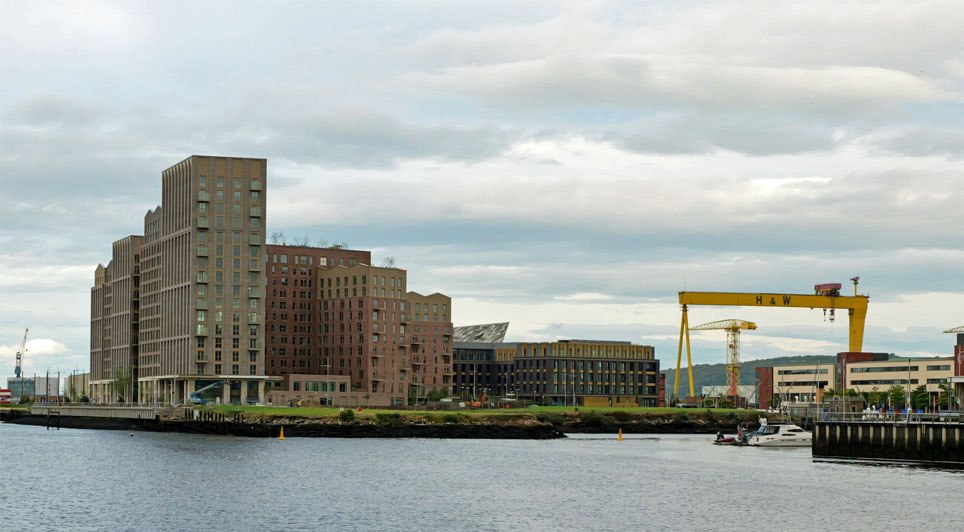
One of Northern Ireland's universities has unveiled a £250m development plan, which will see the construction of a massive new capital city campus.
The University of Ulster scheme is also set to create much-needed construction jobs for the local building sector.
Work will take place on the Interpoint site - which was originally the Belfast Co-op store - and is adjacent to its existing Belfast campus.
University officials said the project represents the institute's largest ever investment.
The master plan also involves the implementation of the first phase of an expansion of student numbers on the Magee campus.
This will provide a basis for future growth by creating new academic units and facilities to drive student recruitment and enhance research capacity.
Details of the development plans for the University's North West campuses are to be released next week.
At its Coleraine campus, the university plans to consolidate student numbers and diversify its activities by facilitating the establishment of a business park on university land.

All of the campus developments will be funded out of the university's capital budget, of which half will be allocated to the greater Belfast campuses (Jordanstown and Belfast) and the remainder to its North West campuses (Magee and Coleraine).
Professor Richard Barnett, Vice-Chancellor of the University of Ulster, said: "Our recent upgrade to the Belfast campus has shown us that there is an enormous appetite for the University of Ulster's programmes in central Belfast.
"We have new architecture, urban design and landscape studies programmes there, and are developing our continuing professional development and executive education programmes.
"A vibrant city centre location is important for those kinds of programmes and the students they attract, and our strategic vision is to provide the space and facilities needed for these activities to flourish."
The development is expected to inject further economic stimulus in the the emerging Cathedral Quarter.
Professor Barnett said that it was the challenge of what to do with the main building on the Jordanstown campus – now nearing the end of its design life – that provided the university with the opportunity to clarify how it can "take forward its mission in the 21st century".
"As shown in the JM Consulting Report in 2006, commissioned by the Department for Employment and Learning, the cost of adapting this type of 1970s building would be almost as high as the cost of total replacement, and the outcomes would be less satisfactory for modern higher education, and probably less economic in the long-run," he said.
The Vice-Chancellor added that details of a number of initiatives planned for the University's two campuses in the North West would be announced shortly.
(PR/BMcC)