Ireland
 UK
 Scotland
 London


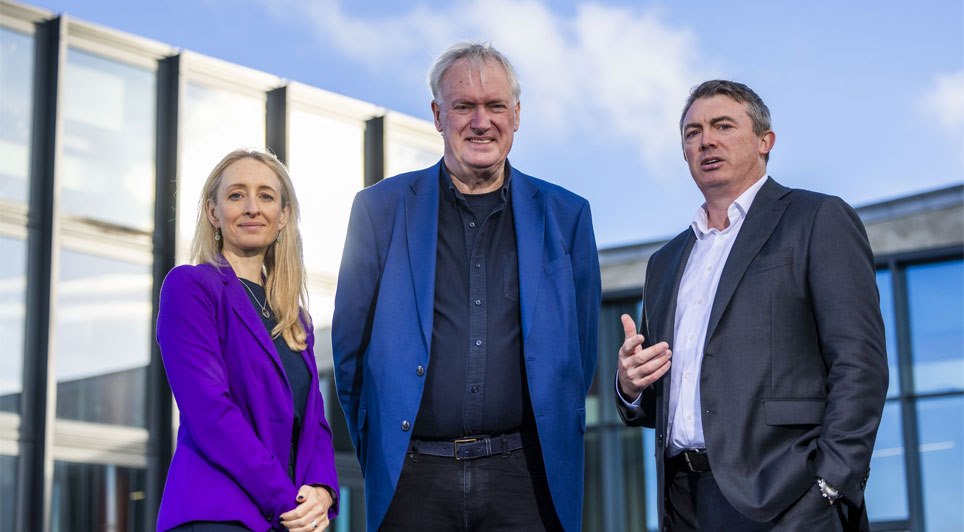
Five Irish research teams are competing for a €1m award with projects ranging from seaweed-based energy to artificial intelligence and the conversion of plastic waste into hydrogen.
The Research Ireland – Gas Networks Ireland Innovation Challenge is a €2.6m initiative supporting technologies intended to help decarbonise Ireland's energy system and national gas network.
The teams presented their work at TU Dublin's Grangegorman campus at the start of Science Week 2026. More than 100 researchers and industry representatives attended the event, which examined how the projects could move from research towards practical application.
All five teams have received initial funding and entered the Seed phase, with further funding released as their projects progress. They are competing for an additional €1m award for the team judged to have the greatest potential to transform Ireland's gas network and benefit wider society. The prize is due to be awarded in June 2027.
Professor Luke O'Neill, who facilitated the event's discussions, said: "I was hugely impressed by the ambition showcased, particularly as the teams are asking exactly the kinds of questions that make scientific research so exciting.
"The possibilities are fascinating and it is encouraging to see such talented researchers applying their expertise to one of the defining challenges of our time. Their work has the potential to help shape the future role of the gas network and how we decarbonise our energy systems."
The five projects cover renewable gas production, digital technology, materials science and integrated energy systems:

ALgas: University of Galway researchers are investigating how seaweed could be processed into renewable energy, potentially creating opportunities in Ireland's marine bioeconomy.
BIOGRID: Led by the University of Limerick, this project is examining ways to upgrade biogas into higher-quality renewable gas and increase biomethane yields from existing production infrastructure.
DIGIGAS: Researchers at Atlantic Technological University and University College Dublin are exploring how artificial intelligence and digital tools could improve monitoring, diagnostics and operational decisions on the gas network, including for future renewable gases.
O.P.P.O.R.T.U.N.I.T.Y.: Led by researchers from Dublin City University's Faculty of Engineering and Computing, the project aims to develop low-energy processes that turn hard-to-recycle plastic into useful products, particularly hydrogen. It is investigating methods compatible with existing waste-management infrastructure as an alternative to established end-of-life treatments.
EngageGasGrid: Researchers from Tyndall National Institute and University College Cork are studying renewable gas technologies and their place in future integrated energy systems. The team will model and validate alternative pathways through a structured approach involving stakeholders.
Ruth Freeman, Research Ireland's director of research for society, said: "Excellent research has the potential to address some of society's most pressing challenges and deliver lasting benefits for people and communities. The projects showcased demonstrated the value of bringing researchers and industry together to explore innovative solutions with the potential for significant societal impact.
"It was particularly fitting that the event took place during Science Week and Public Service Transformation Week, highlighting the importance of research, collaboration and innovation in building a better future for Ireland. Supporting researchers to develop new approaches and innovative solutions that contribute to the sustainability of Ireland's gas network and the wider energy system is an important investment in the country's long-term prosperity."
Bobby Gleeson, Gas Networks Ireland's chief operations officer, said: "This challenge demonstrates Gas Networks Ireland's commitment to innovation and how essential it is in building the energy system of the future. Working with academia we can help translate innovative thinking into practical solutions that support Ireland's decarbonisation ambitions.
"The €1m award offers a significant opportunity for the successful team to take its research to the next stage. We look forward to seeing the potential of these projects as they move closer to real-world application."
The programme uses competitive challenge funding to encourage research-led solutions to complex problems. Its six-month Concept phase provides successful teams with up to €50,000; the 12-month Seed phase offers up to €150,000 to each of the five teams; and the Prize phase lasts up to 24 months, with the €1m award to be presented in June 2027.