Ireland
 UK
 Scotland
 London


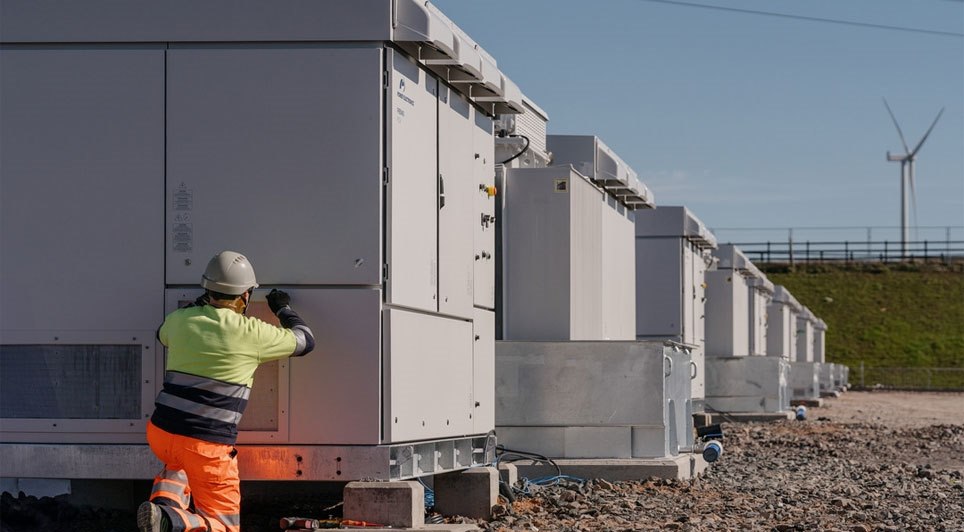
Battery storage units supplied 175% more energy to the all-island electricity grid between 13 November 2025 and 3 November 2026 than in the equivalent period a year earlier, according to EirGrid.
The increase followed changes introduced in November 2025 by EirGrid, SONI and SEMO under the Scheduling and Dispatch Programme, known as SDP-02. The changes allow batteries to participate more effectively in electricity markets and in scheduling and dispatch, charging when electricity is available and releasing it when needed.
During the 5pm to 7pm evening peak, batteries supplied an average of 2.7% of electricity demand over the period, up from 1.1% a year earlier. Their contribution reached a maximum of 9% during that window.
From April to September 2026, batteries charged more during the day than overnight, corresponding with periods of higher solar generation. Storage allows electricity to be shifted to times when it is more useful to the system.
Battery power supplied to the grid peaked at 520 MW on 31 January 2026. By comparison, average peak demand is around 100 MW in Galway, 83 MW in Drogheda, 75 MW in Limerick and 69 MW in Athlone.

Marking a year of the programme, Minister for Climate, Energy and the Environment Darragh O'Brien said: "The first year of EirGrid's schedule and dispatch programme for battery storage has been very successful. And it is clear that the programme is increasing the value and utilisation of battery units and helping to support the Irish transition to a low-carbon future.
"Delivering 2.7 times as much energy to the grid in its first year is very significant and shows just how critical a role that battery storage can play in meeting Ireland's energy needs, now and into the future.
"Battery storage is now regularly contributing more than 400MW of generation during evening peak demand periods, which is equivalent in scale to a large gas-fired power station, reducing costs for consumers and emissions for Ireland.
"Collectively, we need to build on this benefit by procuring more long duration storage and facilitate full integration of hybrid renewables and storage projects into the market."
CRU Commissioner Jim Gannon said: "The first year of SDP-02 shows the tangible impact that changes to our electricity market arrangements can have on how the power system operates. Enabling batteries to participate more effectively helps the system make better use of renewable electricity and provides additional flexibility when it is needed.
"The CRU will continue to work on shared initiatives of this nature with EirGrid, SONI and SEMO to support a secure, flexible and increasingly renewable electricity system, while protecting the interests of consumers."
EirGrid's Chief Energy Transition Officer Liam Ryan added: "These results show the growing contribution batteries are making to the electricity system following the introduction of SDP-02.
"The programme enables us to make better use of battery storage, helping to balance supply and demand and support the integration of renewable electricity, as well as supporting competitiveness.
"Making better use of this flexibility is an important part of operating a secure and increasingly renewable power system."