Ireland
 UK
UK Scotland
 London

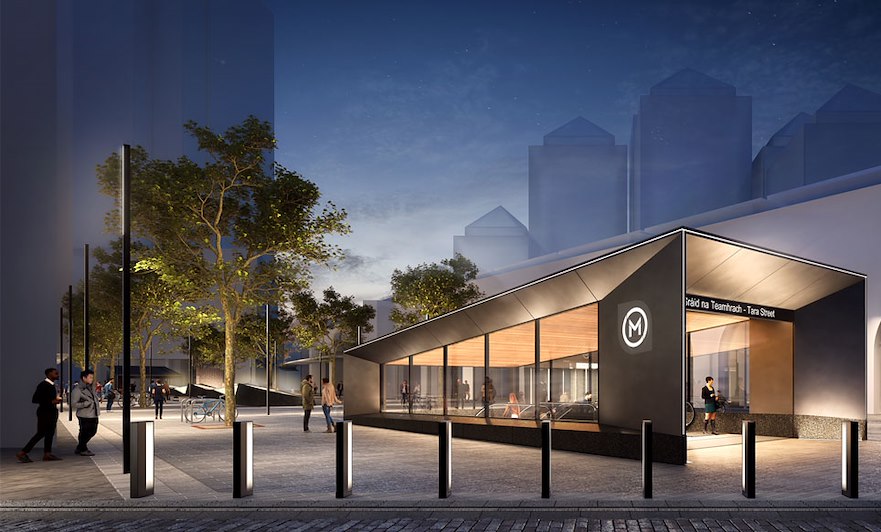
Minister for Transport Darragh O’Brien has today received approval from Cabinet to move MetroLink to the detailed tender stage, where market bids will be sought and partners selected to build and operate MetroLink.
This is a major milestone for MetroLink. Significant enabling works are to start on site from early next year, followed by heavy tunnelling and station construction.
MetroLink will be the largest single project in Ireland since the construction of the Ardnacrusha hydro power plant in the 1920s, and will involve thousands of workers to deliver strategic benefits for generations to come.
Minister O'Brien said: "I welcome the important step forward for MetroLink, a vital transport project that will help reduce traffic congestion, improve access to Dublin Airport and unlock much-needed new housing development at scale.
"MetroLink will support the delivery of approximately 77,000 new homes along its route and, through its integration with other public transport services, up to 200,000 new homes across the Greater Dublin Area.

"This is a game-changer for Dublin and the wider region as we work to deliver more homes for a growing population. MetroLink will not only transform connectivity and access but also strengthen our economic competitiveness, support sustainable growth and unlock the development potential of communities across the Greater Dublin Area.
"MetroLink also supports decarbonisation by providing a reliable, low-carbon alternative to private car travel, helping to reduce road traffic, transport-related emissions and overall carbon footprints across the region."
The decision follows a joint review by the Department of Transport and the National Transport Authority of the Detailed Business Case under Approval Gate 2 of the Infrastructure Guidelines. The estimated cost (including contingency and inflation but excluding VAT) ranges from €14.44 billion to €17.49 billion, with a central estimate of €15.75 billion. The assessed benefits, including faster journeys and reduced congestion, outweigh the costs. Firm cost ranges will only be known once market bids are received next year.
Key features include 19km of largely underground metro linking Estuary/Swords to Charlemont, with stations serving Dublin Airport, Ballymun, Glasnevin, Dublin City University, the Mater and Rotunda Hospitals, and Dublin city centre. Trains 64 metres in length are planned to operate every three minutes at peak in each direction on opening, serving 16 accessible, high-quality stations.
The system is designed to carry up to 20,000 passengers per direction per hour—more than double the current Luas Green Line capacity. By directly integrating with services such as DART and Luas, MetroLink will amplify transport connectivity across Dublin and beyond.
Wider strategic and societal benefits include improved access to jobs and services, enhanced environmental sustainability, and the facilitation of large-scale housing across the Greater Dublin Area.