Ireland
 UK
 Scotland
 London


ESB and the European Investment Bank are have signed a new loan facility which will provide €235 million funding for ESB’s ambitious investment programme to develop smarter and more sustainable electricity network infrastructure in Ireland.
The loan, from the European Union's long-term lending institution, will provide 50% funding for an investment programme of €470m which is to be delivered by ESB Networks over 2 years. The programme includes key projects to enhance transmission and distribution links from wind farms and to improve the efficiency and capability of the electricity networks to facilitate greater integration of renewable energy sources. The programme also includes the technical design phase of a national smart metering programme, and the initial phase of installation of charging infrastructure for electric vehicles across Ireland.
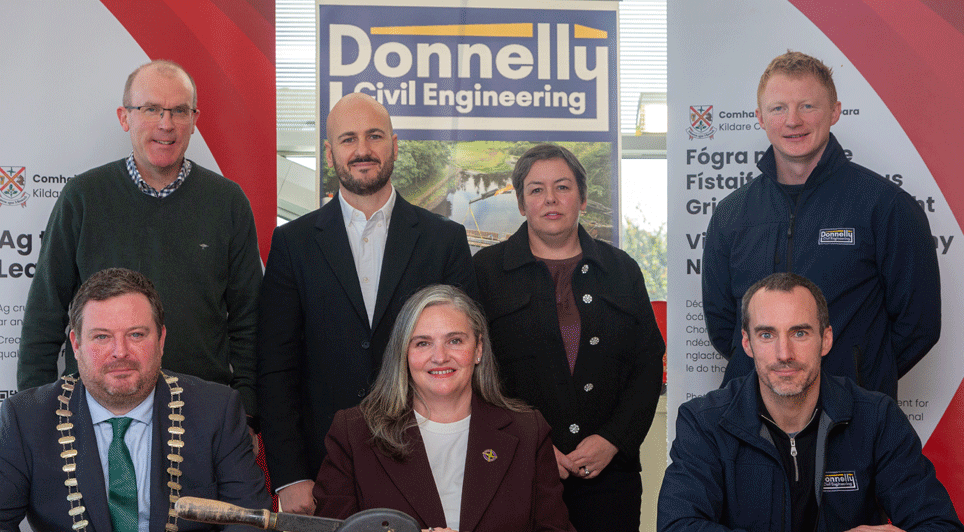
Plutarchos Sakellaris, European Investment Bank Vice President, and ESB Chief Executive, Padraig McManus, in the presence of Minister for Communications, Energy & Natural Resources, Pat Rabbitte signed loan agreement.

"Significant and well-planned investment in electricity networks is essential to enable effective use of renewable energy potential, improve energy efficiency through implementation of smart meters and encourage environmentally friendly use of electric cars," Mr. Sakellaris said.
"The European Investment Bank is committed to supporting improvements to energy supply and climate action in Ireland and welcomes ESB's efforts to tackle energy challenges across the country," he added.
Mr McManus said the signing of this new loan facility marks the continuation of ESB’s long relationship with the European Investment Bank.
"This next phase of investment will enable ESB Networks to handle the anticipated increased wind generation, as well as progressing our smart metering and electric vehicle infrastructure programmes."
The programme will include the provision of over 270km of new high voltage lines to reinforce existing transmission links from the southwest, west and northwest of Ireland, which has significant wind generation capacity, to the main population centres in the east. Electricity distribution across the country will benefit from refurbishment and equipment replacement to meet growing demand. The capacity of more than 8,000km of rural networks will be doubled and 140km of new distribution lines will be installed in Connemara, Co. Galway to relieve voltage problems in the region.
The new investment programme for electricity distribution will also incorporate specific design requirements to enable mass deployment of smart meters across the country. Plans for a significant increase in electric car use in Ireland will be boosted by the installation of 1,500 on-street charging points and 2,000 domestic chargers.
(CD)