Ireland
 UK
 Scotland
 London


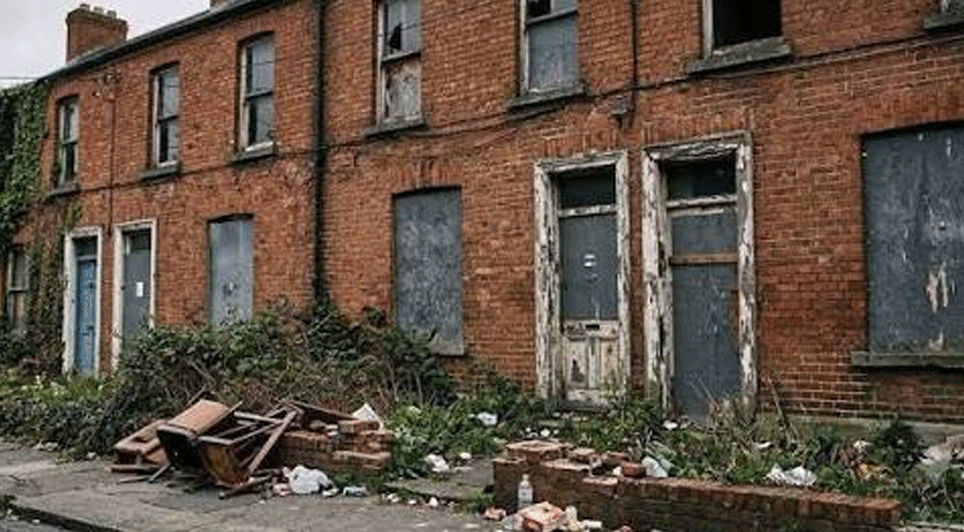
Fine Gael TDs said the newly introduced Derelict Property Tax will help bring long-empty buildings back into use and boost communities nationwide.
Deputies John Clendennen and James Geoghegan welcomed the measure, noting that the Department of Finance's Finance Bill published today provides for a levy of 7% of a property's self-declared market value.
They pointed to existing supports designed to tackle vacancy and dereliction, including Croí Cónaithe, which offers up to €70,000 to refurbish vacant and derelict properties and has been expanded to include a Vacant Above the Shop grant. They said the new tax is another key instrument to address dereliction in towns and communities.
Deputy Clendennen said: "The new Derelict Property Tax is an important step towards tackling dereliction, revitalising our towns and communities, and making better use of the buildings and properties that already exist across Ireland.
"For too long, derelict buildings have stood idle in our town centres and residential areas, contributing to declining streetscapes, undermining local pride and leaving valuable properties unused at a time when communities urgently need more homes, services and opportunities.

"This policy developed by Tánaiste Simon Harris has the potential to help change that."
Announced by Tánaiste Simon Harris on Budget Day, the tax is intended to tackle the scourge of dereliction in towns and villages nationwide and will be rolled out in phases.
In year one, it will apply to towns and cities recorded in Census 2022 with populations of 4,000 or more; in year two, it will extend to towns with populations of 2,000 or more.
The levy will be charged at 7% of the self-declared market value of a property on the liability date. Owners who undervalue their properties face a surcharge that scales with the extent of the under-declaration.
Deputy Geoghegan added: "By placing greater responsibility on property owners to address dereliction, the new tax sends a clear message that buildings should not be left to deteriorate indefinitely when they could be restored and returned to productive use.
"The benefits could extend well beyond individual properties. Bringing derelict homes, shops and commercial buildings back into use can help create housing opportunities, support local businesses, attract investment, improve public spaces and strengthen the social and economic life of our communities.
"Our towns and villages should be places where people want to live, work, shop and spend time. Regenerating neglected buildings can help breathe new life into local streets, protect the character of our communities and create more welcoming environments for residents and visitors alike.
"We also recognise that successful implementation will be essential. Local authorities must be adequately supported to identify derelict properties, maintain accurate registers and ensure that the policy is applied fairly and consistently.
"Ultimately, the success of this should be measured by the number of derelict properties brought back into use, the homes made available, and the lasting improvements delivered to communities."