Ireland
 UK
 Scotland
 London


Dublin City Council has launched a new design to rejuvenate College Green.
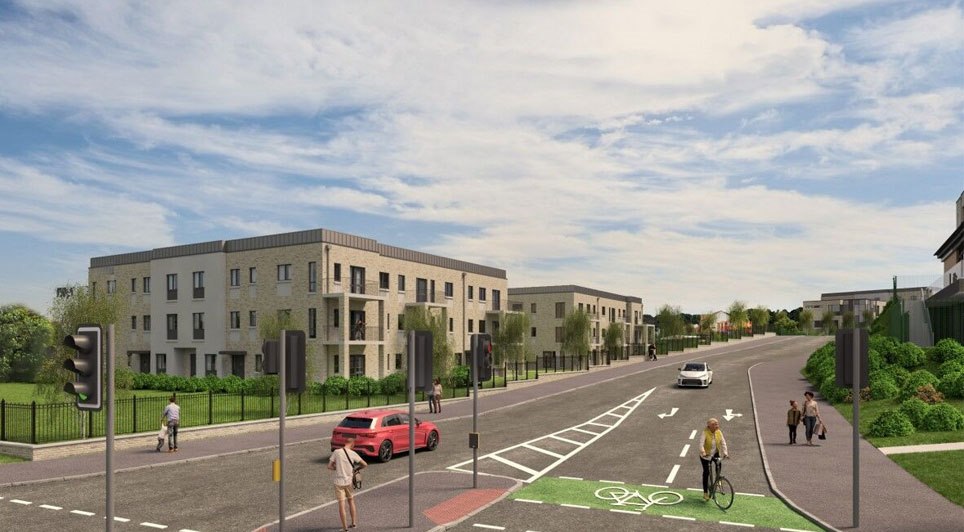
Designed by Dixon Jones/Paul Keogh Architects, the newly shaped College Green development will be a 7,300 sq metre area for people to enjoy in the heart of the city centre.
The tree-lined and granite-paved space has also been designed to facilitate major public gatherings and processional events through the city. It has the capacity to accommodate up to 15,000 people and will be fully equipped with the infrastructure required to stage large public events.
In order to enhance the views of the historic buildings and optimise the space for public events, the existing trees will be removed and 22 new trees will be planted. The existing Henry Grattan and Thomas Davis monuments will be restored and retained as key focal points on an axis with the gates of Trinity College. The Thomas Davis monument will be relocated slightly further west of its current position.

The civic space will reclaim College Green's historic footprint from the gates of Trinity College to Anglesea Street, and will include Foster Place. There will be a defined cycle route to allow cyclists traverse the new civic space to connect with cycle lanes to the east and west of the space.
Dick Brady, Assistant Chief Executive at Dublin City Council, said that the proposal to remodel College Green as a pedestrian–priority space is a Dublin City Council and National Transport Authority initiative.
"The College Green project is a major public realm project which reflects the Council's desire to continuously improve the City's attractiveness for citizens, support its economic vibrancy and maintain its place as a top destination for visitors," he said.
Dublin City Council will submit the project to An Bord Pleanála for consideration later this month. Subject to planning permission, construction of the College Green civic space is scheduled to commence in January 2018 following a public tender process and will take a year to complete.
(CD/LM)