 Ireland
 UK
UK Scotland
 London

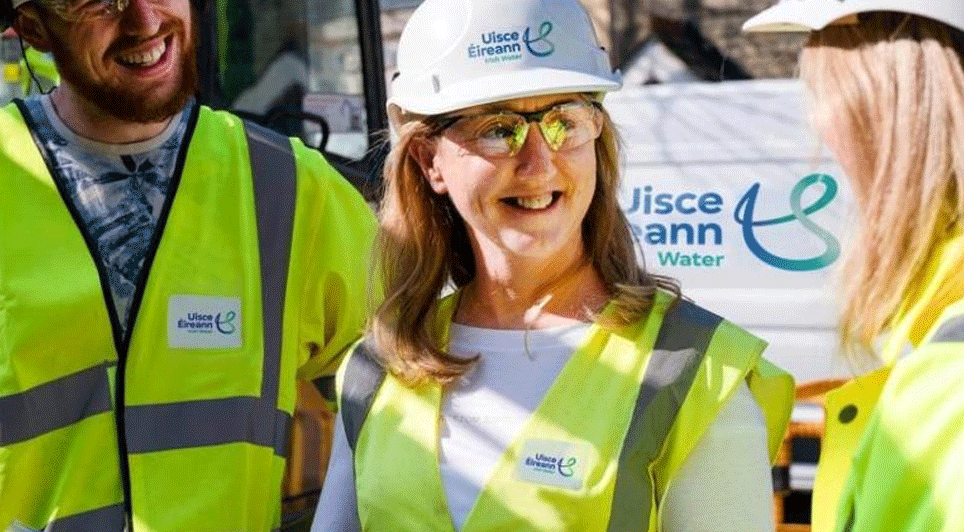
A sod-turning ceremony has been held in Kildare to mark the beginning of construction on the Upper Liffey Valley Sewerage Scheme Contract 2B.
The €38 million project includes the laying of over 18km of new sewers to reinforce and improve the wastewater network, supporting future population and economic growth in Sallins, Clane, Prosperous, Naas, Kill and Johnstown and the surrounding areas.
The investment in Naas will ensure wastewater is treated and discharged in compliance with the Urban Wastewater Treatment Regulations 2001, ensure compliance with conditions set out in the EPA's Wastewater Discharge Licence and help Ireland avoid substantial EU penalties.
The project is needed as the current wastewater infrastructure is unable to support the needs of the area and it is not compliant with Urban Wastewater Treatment Regulations 2001 and conditions as set out in the EPA's Wastewater Discharge Licence.
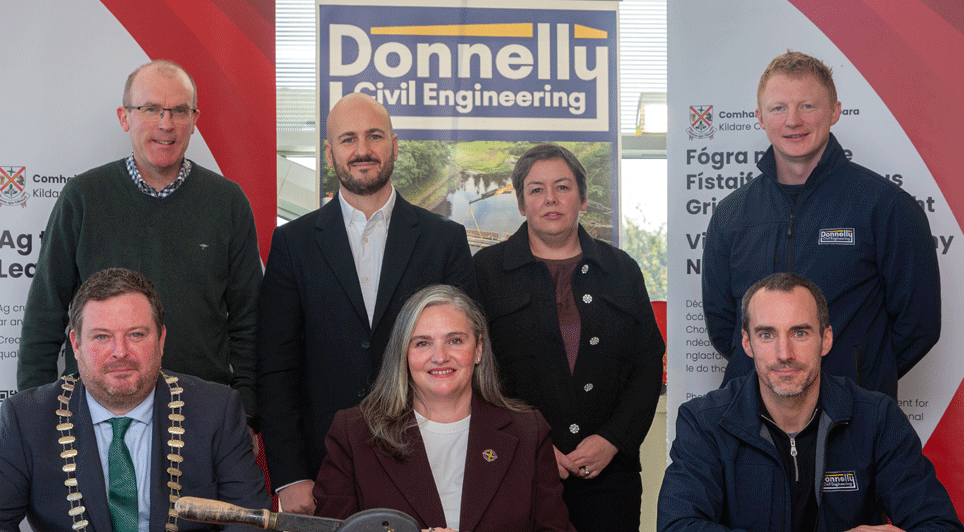
Speaking at the event, Councillor Seamie Moore, Leas-Cathaoirleach of Kildare County Council, said: "I'm delighted to be here to witness the start of works on this vital project. Here in north Kildare, we have seen massive development and growth in recent decades. This development has put strain on the vital infrastructure that supports homes and businesses every day. To enable future growth in the area, significant upgrades are required. This project will safeguard the wastewater system, and ensure there is capacity for future growth in towns across our area."
Minister for Housing, Planning and Local Government, Eoghan Murphy TD, added: "This Government has long recognised the need to invest in our water and wastewater infrastructure and is committed to providing funding to Irish Water to enable the national utility to deliver on the critical projects, like this one, that are so badly needed. We are addressing and achieving success by delivering on our promise to invest and upgrade our water and wastewater infrastructure bringing it in line with international standards. This investment is needed to provide the area with the infrastructure to support the building of houses, schools, attract new industry and allow the companies we have to expand and grow."
(CM/MH)












![PEFC [Ireland] Ltd](http://www.construction.co.uk/advnew/588433bul.jpg)