Ireland
 UK
UK Scotland
 London

The major upgrade at Ireland's largest wastewater treatment plant in Ringsend has reached a key milestone.
Work has been completed on the first phase of work, marking the commencement of operation of a new 400,000 population equivalent treatment facility. When fully complete, the Ringsend plant will have the capacity to treat the wastewater for a population equivalent of 2.4 million by 2025. It will support future housing and economic development, while protecting the environment of Dublin Bay.
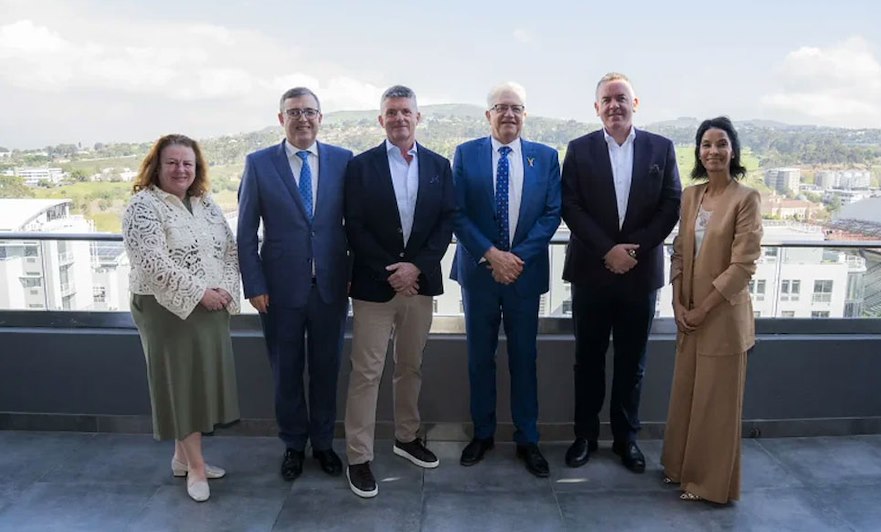
Housing Minister Darragh O'Brien visited the plant to view the progress of the works, with Irish Water's Managing Director Niall Gleeson welcoming him to the site.
Speaking during his visit, Minister O'Brien said: "I am delighted to see the progress being made in upgrading Ringsend Wastewater Treatment Plant. This is a critical piece of infrastructure to enable our capital city to grow and thrive while protecting water quality in Dublin Bay. Investment in water and wastewater services will support the delivery of housing and wider economic and social development, in line with the objectives of Housing for All, our new Plan for Housing in Ireland."
Niall Gleeson, Irish Water's Managing Director, added: "The upgrade of the Ringsend Wastewater Treatment Plant is essential in order to support future housing and commercial development in the Greater Dublin Area while also protecting the marine environment in the Liffey Estuary and Dublin Bay. This represents an overall investment of €500 million in the city's wastewater infrastructure that will ultimately facilitate sustainable growth into the coming decade and beyond.

"Ringsend has been treating Dublin's wastewater for over a century and is Ireland’s largest wastewater treatment plant, treating 40% of the public wastewater load of the State. There are many complexities and challenges in delivering a project of this scale, not least the necessity to maintain the normal operation of the plant throughout the upgrade works. We are making very good progress thanks to the co-operation and support of our project teams, contractors and local authority partners. And we are confident that we are on track to deliver this key piece of infrastructure on time and on budget for the benefit of all the people living in the Greater Dublin Area."
The four key elements of the upgrade include provision of additional secondary treatment capacity with nutrient reduction; upgrade of the 24 existing secondary treatment tanks to provide additional capacity; provision of a new phosphorous recovery facility; and expansion of the plant's sludge treatment facilities.
The Capacity Upgrade facility began accepting flows for treatment last month (November 2021). This facility will enable current treatment levels to be maintained during the remainder of the upgrade of the existing secondary treatment tanks.
Works are proceeding on the upgrade of the 24 existing secondary treatment tanks to provide additional capacity and nutrient reduction. The addition of Aerobic Granular Sludge (AGS) technology to the existing secondary treatment tanks will allow more wastewater to be treated to a higher standard. AGS is an advanced nutrient removal technology. This will bring benefits for water quality in the River Liffey Estuary and the nutrient-sensitive Dublin Bay area.
Irish Water is also continuing to make good progress on the delivery of the new phosphorous recovery facility, and with the expansion of the plant's sludge treatment facilities.