Ireland
 UK
UK Scotland
 London

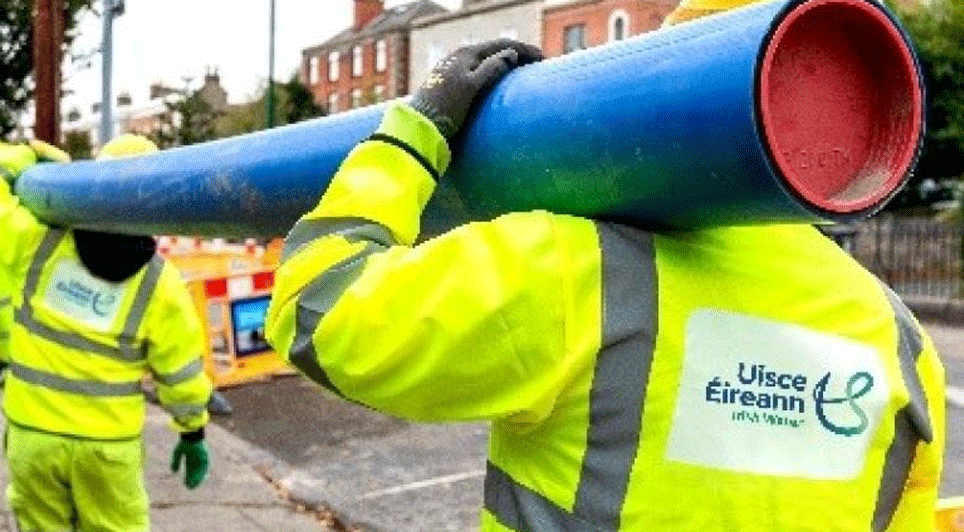
Uisce Éireann continues to deliver large-scale improvements to Ireland's wastewater infrastructure, with record levels of investment supporting environmental protection and sustainable development across the country.
The Environmental Protection Agency's (EPA) Urban Wastewater Treatment Report 2024 recognises the significant progress made, while also outlining areas that still need attention. Uisce Éireann is addressing these through a multi-billion-euro capital investment programme – the largest ever undertaken in the state.
Many operational challenges arise from the age and condition of Ireland's wastewater assets, developed over decades of under-investment. The national network includes over 1,000 treatment plants, 2,200 pumping stations and 26,000km of sewers, much of which requires modernisation to meet today’s environmental and performance standards.
To strengthen delivery and resilience, Uisce Éireann has introduced new organisational structures to improve operational oversight, incident response, and long-term asset management. This ensures the utility is better equipped to manage risks and maintain compliance across the network.
In 2024 alone, Uisce Éireann invested €481.4 million in wastewater infrastructure – an increase of nearly €150 million per year since 2020, bringing total investment to over €2 billion in that period. The programme focuses on upgrading existing facilities and constructing new treatment plants to meet future demand and regulatory standards.
Recent project highlights include major works completed at Ringsend and Arklow, with large-scale schemes in Athlone and Enfield on track for completion by the end of this year. These projects are essential for protecting public health, supporting housing and economic growth, and ensuring compliance with environmental directives.

At present, 92% of Ireland's wastewater treatment plants meet the requirements of the Urban Wastewater Treatment Directive. For the remaining sites, targeted upgrade plans are in place to achieve compliance as quickly as possible.
Significant progress has also been made in eliminating raw sewage discharges. Since 2014, new wastewater infrastructure has been delivered for 35 towns and villages, ending raw sewage discharge for over 85% of affected areas – the equivalent of 128,000 people. The completion of the new Arklow Wastewater Treatment Plant earlier this year marked a major milestone, ending decades of untreated discharge and enabling future housing and commercial development in the town.
However, some projects remain delayed due to planning and legal challenges. For instance, the proposed new sewerage scheme in Kilkee, County Clare, is currently subject to Judicial Review proceedings.
Investment continues at Ringsend Wastewater Treatment Plant, the largest in the country, where €550 million is being spent to expand capacity to serve a population equivalent of 2.4 million while meeting Urban Wastewater Treatment Directive standards.
The overall impact of urban wastewater on receiving waters continues to decline. Once the largest environmental pressure, it is now the fourth most significant, reflecting ongoing progress in treatment and infrastructure improvements.
Maria O'Dwyer, Uisce Éireann's Director of Infrastructure Delivery, said some of the issues highlighted in the EPA report underlined the scale of the work that still needs to be done to bring our wastewater network to the standard everyone would like to see.
"We are getting there but it will take many years and continued investment, as well as support from government, our regulators, communities and our customers, to reach the standards we want to achieve," she said.
"We know what needs to be done and have an ambitious plan in place to achieve it. Securing the necessary statutory consents for our projects has been a significant challenge, and we have encountered legal obstacles in several locations. For example the Greater Dublin Drainage Project, which is critical to meeting the rapidly growing wastewater needs of the Greater Dublin Area, has been stuck in the planning system for more than seven years and is currently subject to Judicial Review proceedings which risk delaying it further. Sustainable development cannot happen without appropriate water services infrastructure, and it is imperative that Uisce Éireann is given appropriate consideration in legislation at the plan, policy, and project levels to enable delivery of these essential projects."
She added: "Like everyone else we would like to see faster progress in the delivery of essential wastewater infrastructure, but we remain committed to working closely with the government and all relevant agencies to expedite these processes. Our goal is to ensure the timely delivery of projects that protect public health, enhance the environment and support sustainable development."