Ireland
 UK
UK Scotland
 London

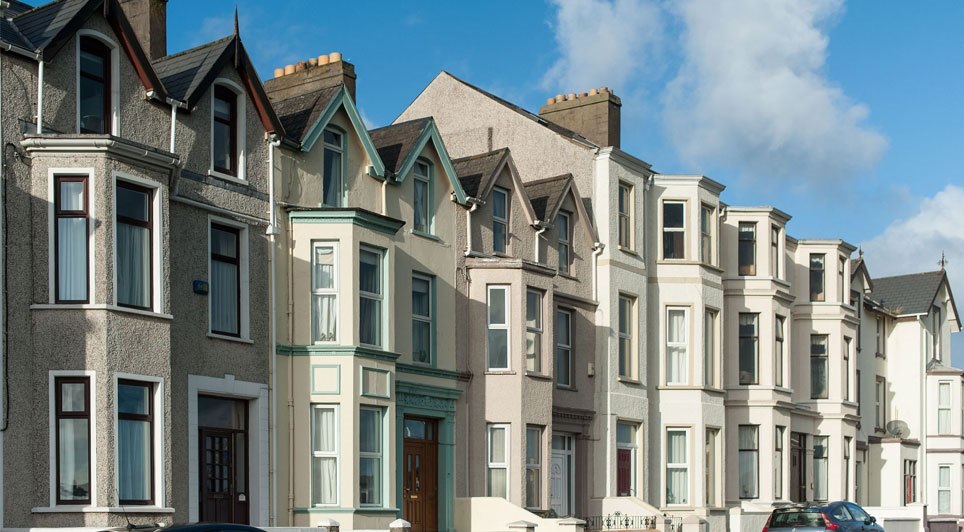
Northern Ireland's housing market extended its run of steady gains in the three months to June 2026, according to the Northern Ireland Quarterly House Price Index compiled by Ulster University with the Northern Ireland Housing Executive and Progressive Building Society. The analysis of 5,981 sales completed between April and June points to continued resilience and stability.
On a weighted basis, the index recorded a 2.9% quarterly rise and a 6.6% annual uplift. Agents report firm underlying demand, stable mortgage interest rates and healthy buyer activity, although purchasers are taking longer to decide and are increasingly price-aware. Even so, the region continues to outperform many other parts of the UK.
All major property types posted quarterly and annual gains. Detached homes led annual growth, up 8.24% to an average £341,166 (q/q +2.0%). Apartments delivered the strongest quarterly rebound, up 4.4% to £170,459 after being the sole laggard in Q1 (y/y +7.58%). Terraced/townhouse values rose 3.7% over the quarter to £157,455 (y/y +5.72%), while semi-detached homes edged up 0.8% to £210,080 (y/y +3.86%).
Nine of the 11 Local Government Districts saw quarterly price increases. Mid Ulster recorded the largest rise at 5.1%, followed by Mid & East Antrim (4.4%) and Derry City & Strabane (4.2%). Belfast and Lisburn & Castlereagh each climbed 3.1%. Modest declines were noted in Causeway Coast & Glens (-1.5%) and Fermanagh & Omagh (-2.0%), which the report attributes to local market adjustments rather than wider weakness. Other areas posted smaller gains, including Antrim & Newtownabbey (+2.4%), Armagh City, Banbridge & Craigavon (+1.6%), Ards & North Down (+0.2%) and Newry, Mourne & Down (+1.7%).

Dr Michael McCord, reader in valuation, investment and finance at Ulster University, and lead researcher, stated: "The second quarter of 2026 points to a housing market that remains resilient, with sustained buyer demand continuing to support stable price growth. The average transaction price increased to £229,462, with the weighted index recording growth of 2.9% over the quarter and 6.6% annually. While demand and market confidence remain positive, buyers are increasingly affordability-conscious and price-sensitive, meaning that realistically priced and well-presented properties continue to perform most strongly.
"The central challenge facing the market remains the imbalance between housing demand and available supply, alongside continued pressures around borrowing and deposit affordability. We are also seeing growing concern from agents about the efficiency of the conveyancing process, where lengthy completion times can constrain transactions and contribute to sales falling through. Looking ahead, the underlying fundamentals suggest that the market should remain resilient, but we expect price growth to continue at a relatively stable and sustainable pace. Improving housing supply and transaction efficiency will be increasingly important if Northern Ireland is to maintain a healthy and accessible housing market."
Ursula McAnulty, Head of Research at the Housing Executive, which commissions the analysis, said: "The optimism displayed in the housing market in NI in Q1 2026 continued into Q2, with house prices recording a quarterly increase of 2.9% to £229,462. The annual price statistics also showed a weighted increase, of 6.6%, in comparison to Q2 2025. This consistency in house prices reflects strong underpinning market demand and a stable macroeconomic and mortgage interest rate environment.
"Agents report that buyer demand remains good, market bidding and listings have been stable, transactions are broadly unchanged and market confidence is still positive. However, market evidence from agents also suggests that buyers are more conscious about affordability, and more inclined to negotiate and challenge unrealistic asking prices."
Michael Boyd, Chief Executive of Progressive Building Society, said: "The Northern Ireland housing market remained resilient in the second quarter, with prices rising across all major property types and demand holding firm in most regions. Buyers are becoming more considered, however, and affordability, realistic pricing and value are playing a greater role in their decisions. Stable mortgage conditions should continue to support activity. At the same time, constrained supply and the challenge of raising a deposit are likely to remain key factors in the months ahead, particularly for first-time buyers."
Read the full report: https://www.ulster.ac.uk/__data/assets/pdf_file/0004/1884397/web-UU-26-010-UU-House-Price-Index-Q2-2026.pdf