Ireland
 UK
UK Scotland
 London

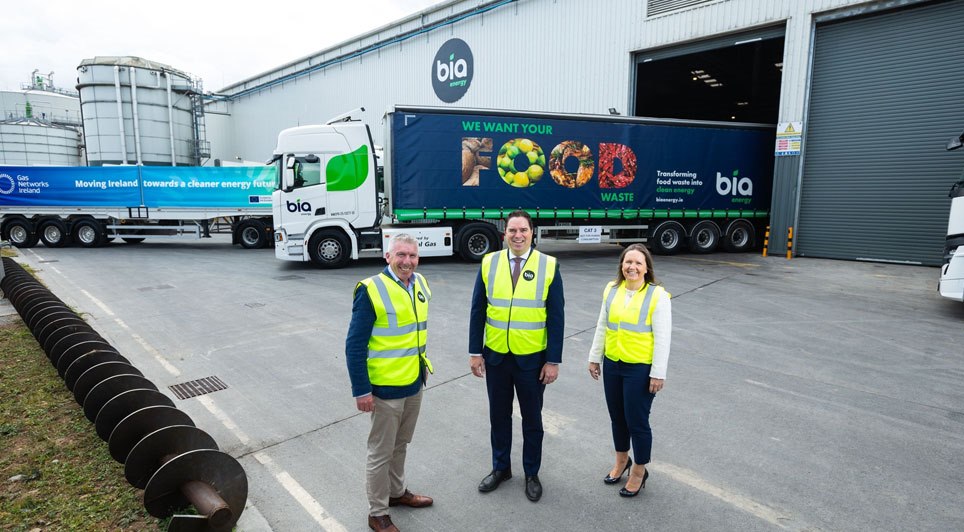
Gas Networks Ireland and Bia Energy have completed the connection of Bia Energy's €90 million biomethane plant in Huntstown, Co. Dublin, to the national gas network — the first direct injection point for biomethane in Ireland. The link was officially launched by Minister for Agriculture, Food and the Marine, Martin Heydon T.D.
The connection enables renewable biomethane generated on site to be injected into the grid for use by businesses and industry nationwide. Biomethane is fully compatible with the existing gas network, appliances, technologies and gas-fuelled vehicles, allowing it to substitute for natural gas in heating, industry, transport and power generation.
Alongside Bia Energy, Gas Networks Ireland now has connection agreements with six other biomethane producers — seven in total — positioned to support the State's renewable gas generation targets.
Speaking as he officially launched Bia Energy's connection to the national gas grid, The Minister for Agriculture, Food and the Marine of Ireland Martin Heydon T.D. said: "The connection of Bia Energy's anaerobic digestion facility at Huntstown represents a significant step forward in the development of Ireland's renewable gas sector. It demonstrates how agricultural and organic waste can be converted into a valuable renewable energy source, reducing emissions and enhancing energy security.
"The project also delivers benefits for agriculture through the production of digestate, which can be used as an alternative to chemical fertilisers, supporting more sustainable farming practices and a circular economy. Last month, the Government started issuing €19 million in funding to projects such as Bia Energy's Huntstown facility that were successful under the 2024 Biomethane Capital Grant Scheme."
To enable the new injection point, Gas Networks Ireland constructed a network extension and a dedicated Biomethane Network Entry Facility at Huntstown, ensuring biomethane can be safely and efficiently introduced into the grid.
Structurally identical to natural gas, biomethane is a carbon neutral renewable gas produced from farm and food waste via anaerobic digestion. The process also yields a nutrient-rich biofertiliser known as digestate, which can replace chemical fertilisers and return nutrients to the food production system, supporting the circular economy and environmental objectives.
Gas Networks Ireland's Head of Business Development Karen Doyle, said: "Bia Energy's new direct connection to the gas network is a landmark day for Ireland's energy transition. Gas Networks Ireland is working to facilitate and assist the expansion of Ireland's biomethane sector, which is currently underway and we already have connection agreements with seven producers. The delivery and commissioning of these facilities will play an important role in helping to secure Ireland's indigenous energy supply and progress towards achieving the State's target of having 5.7 terawatt hours (TWh) of biomethane production by 2030, equivalent to about 10 per cent of the country's current gas demand
"Clean renewable biomethane gas can provide an immediate and practical decarbonisation solution for energy users, enabling businesses to reduce their emissions while continuing to utilise their existing gas infrastructure and equipment."
Bia Energy is among seven biomethane companies to receive funding under the Government's National Biomethane Strategy Capital Grant Scheme, securing almost €3.9 million towards capital costs.
Bia Energy's Chief Executive Officer, Brendan Traynor said: "Bia Energy is delighted to be the first biomethane production plant to be directly connected to Ireland's national gas network. This is a very significant day, not just for the respective teams at Bia Energy and Gas Networks Ireland, who have worked in partnership to achieve this milestone, but also for the entire renewable gas industry in Ireland.
"Through anaerobic digestion we are turning organic waste into a valuable energy resource. Biomethane will play an important role in Ireland's energy future as it will enhance energy security, reduce carbon emissions, and have a positive impact on farming by reducing chemical fertilisers and replacing them with a higher quality organic biofertiliser. Our Dublin facility alone will help replace about 3,000 tonnes of chemical fertiliser every year."
The Huntstown plant, part of the Sretaw group founded by Irish businessman Eamon Waters, converts short-dated and surplus packaged food from the retail and hospitality sectors, along with materials from agriculture and food production, into renewable biomethane.
At full output, the facility is expected to supply up to 120 gigawatt-hours (GWh) of biomethane to the gas network annually. Bia Energy also plans to expand its biomethane portfolio with a new facility in Kildare in the near future.