Ireland
 UK
UK Scotland
 London

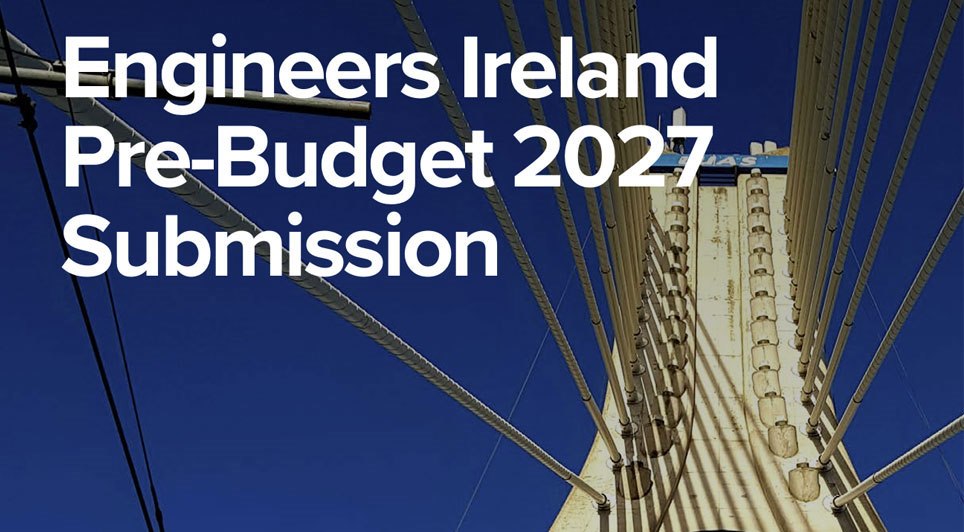
A shortage of engineers and delays to essential infrastructure are jeopardising Ireland's housing targets, the transition to low-carbon energy and the country's economic competitiveness, Engineers Ireland has warned ahead of Budget 2027.
In its Pre-Budget 2027 Submission, the professional body representing more than 30,000 members says Ireland is not producing enough engineering graduates to meet demand across housing, energy, transport and other sectors. Just 10% of Irish third-level graduates in 2024 qualified in engineering, manufacturing or construction, compared with an OECD average of 13% and far behind Germany (21%) and Austria (19%). Almost half of engineering employers reported it took more than six months to fill an engineering vacancy in the past year. Engineers Ireland estimates the country will require more than 22,000 additional engineers over the next decade.
The organisation calls for more places on accredited engineering programmes, an expansion of engineering apprenticeships, and an extension of the Free Fees Initiative to cover the fifth year of accredited integrated engineering master's degrees. It also proposes a national campaign to attract more young people, particularly girls, into engineering careers.

Housing is identified as the infrastructure issue of greatest concern among engineers. While more than 38,000 homes were completed in the 12 months to the end of the first quarter of 2026, Engineers Ireland stresses that delivery depends on adequate water, wastewater and electricity networks. It is seeking faster statutory approvals, proactive provision of Uisce Éireann and ESB connections, and multi-annual budgets for key projects.
On transport, the body is seeking annual investment increases of more than 5% over the next decade, accelerated delivery of MetroLink, DART+ and BusConnects, and a 2:1 funding ratio in favour of sustainable transport to further shift travel away from cars and fossil fuels.
In energy, it argues that infrastructure investment must precede the expected surge in electricity demand from artificial intelligence and data centres, and it calls for a review of Ireland's legal restrictions on nuclear energy so it can be assessed alongside other low-carbon technologies.
Commenting on the submission, Damien Owens, Director General of Engineers Ireland, said: "If Ireland is to continue to enjoy the growth that has been a feature of much of the last three decades of its economic life, it must swiftly and comprehensively deal with the infrastructural deficits that threaten, not only to undermine the quality of life of those living here, but to drastically reduce this country's ability to attract foreign direct investment or support a thriving business community.
"Engineers and engineering remain essential ingredients in the strength of Ireland's economy, and by appropriately supporting the engineering sector in Budget 2027, Government can give Ireland its best chance at continued success."