Ireland
 UK
UK Scotland
 London

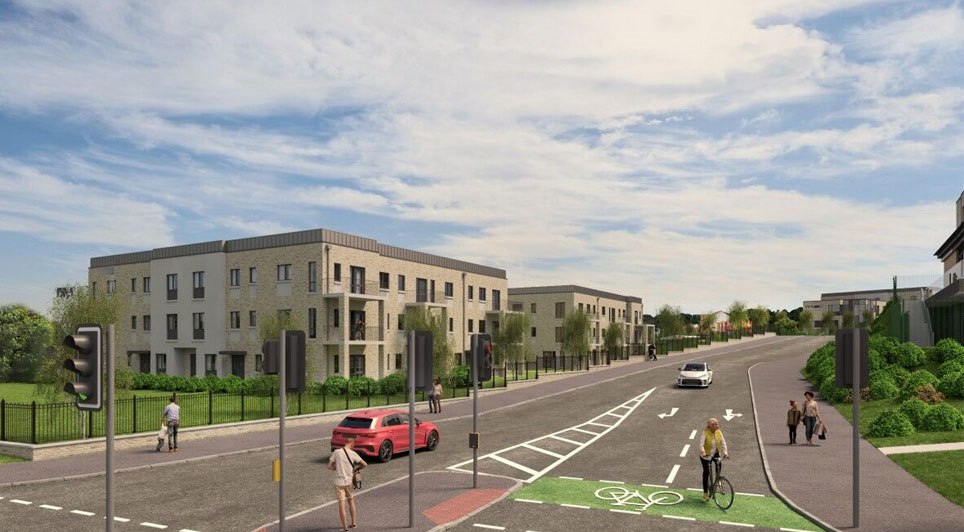
Structural steel firm AMSE Ltd. erected an average of 1,000 tonnes of steel per month at the €80m Abbeylands shopping complex in Ferrybank, County Waterford, it has been revealed.
This project is transforming a seven-acre site into a major shopping attraction in the region with subsequent plans having been announced to develop Ferrybank into a new Irish city
Engineering Director at AMSE, Denis McNelis, explained the fast-track nature of the scheme.
"We were appointed to the project in early 2007 and contracted to detail, fabricate and erect the primary structural steelwork. The structure is a 5 storey beam and column frame, with wide-slab pre-cast concrete floors, and a complex curved Kalzip roof. AMSE were also contracted to provide 1hour fire protection using intumescent paint, with a sealer coat on the basement car park and around the floor perimeters."
"A procurement model was quickly produced by AMSE technicians to allow 5,500 tonnes of steel to be ordered from Corus Mills rollings before the March deadline. This was achieved as AMSE engineers worked in close co-operation with Michael Punch and Partners during this critical stage of the project, to assist in bottoming out the final design."
"This partnership approach allowed 3D procurement models to be drawn in time to meet the extremely tight material procurement window. At the same time, AMSE's operations team liaised with main contractors John Paul Construction throughout February and March to agree sequencing schedules," he added.
"In terms of tonnage this project represents the largest that AMSE has undertaken to date. We utilized 5 of our 10 site crews on this project to meet the accelerated programme. We began erecting on the 9th May and met our completion date in November," Denis explained.
Fabrication commenced at AMSE's production facility in Moate in early April and the first load was delivered to site on the first week in May. In order to satisfy an ambitious accelerated programme, within a confined site due to the phasing of other trades, the structure needed to be planned, fabricated, delivered to site and erected in a carefully planned and choreographed sequence. Foundations, concrete stairwells, lift shafts and 2 storey deep perimeter retaining walls were being constructed concurrently with the steel erection, which determined which areas of the site were available for erection.
This required that the erection of the beam and column structure was divided into 15 phases, and the erection of the roof structure into 4 phases. AMSE erection crews, under the supervision of AMSE contracts manager Rory Harris, erected four levels of steel at a time, using mobile cranes and MEWPs. The roof had to be erected using three site tower cranes as access for mobile cranes was no longer possible.
"Once 4 storeys of steel had been erected for one phase, the pre-cast slabs were lifted into place by tower crane (one of 5 JPC tower cranes on site), as the erection of steel for the next phase began," explained Rory. "By the time phase 10 steel was being erected in late August, the roof of phase 1 was already underway. Close co-ordination between AMSE and JPC on a daily basis, ensured efficient sequencing of erection throughout the project, and optimum programme delivery."
The works increased to include a further 600 tonnes of link-bridge steelwork, which only received planning permission mid-August. With no extension to the original deadline available, AMSE and Corus needed to adapt to meet the additional requirements. AMSE Purchasing Manager Anne Corcoran co-ordinated the procurement of steel from Corus Service Centres Ireland and ensured that all hot-rolled sections were delivered to AMSE's production facility on time, Efficiency and flexibilty allowed AMSE to accommodate the increased scope of works and still meet the original fabrication and erection deadlines.