Ireland
 UK
UK Scotland
 London

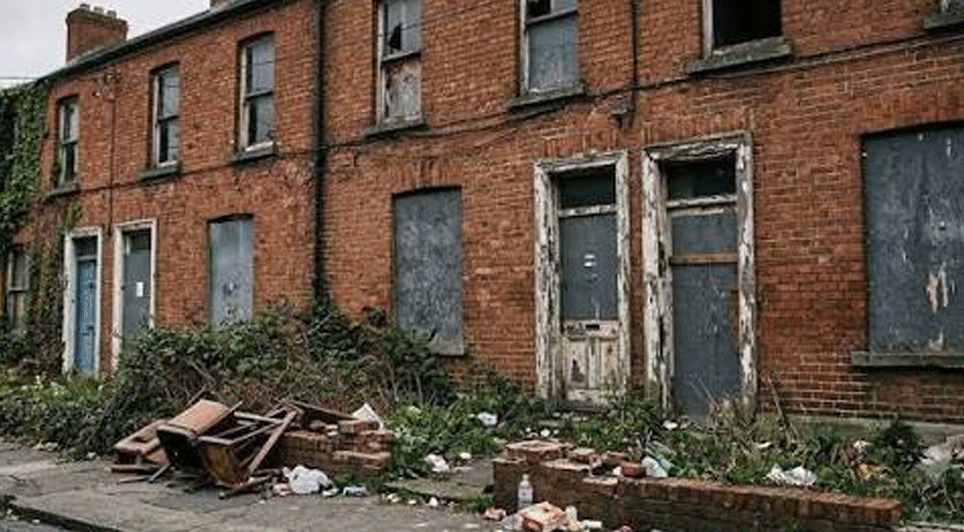
There's a dire need for more social housing in an urban area of Co Antrim - a situation exacerbated by a series of empty properties being demolished over past years - mainly to deal with antisocial behaviour and other problems of dereliction.
It has just been revealed that over 1,000 people are on NI Housing Executive waiting lists for homes in the Antrim town borough, with over half - 530 - deemed to be in 'housing stress', having gained 30 or more points.
The Housing Executive has admitted that new homes are needed in some areas of the borough after just 163 allocations were made over the past year.
A spokesperson for the Housing Executive said: "Based on our Housing Need Assessments, we have identified a need for 335 new homes up to 2012. These Assessments are being reviewed at present.
"The five-year Social Housing Development Programme includes 248 new homes in the Borough up until 2013, subject to funding, and this Programme is also currently under review."

From 1970 until 1996, when responsibility for building new social housing transferred to Housing Associations, there were almost 3,700 new homes built for renting by the Housing Executive in the Antrim District.
The vast majority of these were built during the 1970s in the peripheral Antrim town estates, such as Stiles, Rathenraw, Greystone, Springfarm.
However, since the 1970s, a total of 748 properties have been demolished in Antrim and in recent times, the Housing Executive has turned these sites into open space, pending redevelopment.
But there are positive developments in hand. In November, planning permission was granted to turn land created by the earlier demolition of 192 properties in the Rathenraw estate into open space, pending more appropriate redevelopment.
Similar plans were approved for the former sites of 16 properties at Chaine Court in Ballycraigy. And just last month, permission was given for several properties at Firmount Drive, Greystone, for temporary use of existing housing sites for open space pending redevelopment.
The Housing Executive spokesperson explained that the majority of these demolitions were carried out through the implementation of the Antrim Strategy approved in 1988, to deal with problems including high levels of vacant properties and associated anti social problems in the town's housing areas.
A local councillor, Brian Graham, quoted in the Antrim Times, said he was surprised the number of properties that had been demolished was so high.
"It was the right idea at the time to knock them down, particularly in some areas where they were broken into and vandalised, but in hindsight, particularly with the number of people waiting for homes, there might have been another option," Cllr Graham said.
(BMcC/JM)