Ireland
 UK
 Scotland
 London


A Minesto Deep Green 'underwater kite' marine power plant is now producing electricity in the waters off Northern Ireland.
This is the first time ever a marine power plant designed for low velocity currents produces electricity at sea, anywhere in the world, and the ocean trials verify the ability to unlock ocean currents as a renewable energy source.
The breakthrough ocean trials with a 1:4 scale Deep Green power plant in Strangford Lough proves power production from slow currents using a surface-mounted installation, a concept that is directly transferable to full commercial installations in ocean currents.
To date, no one else has proven a viable case for ocean current power that has been verified through offshore trials.

Deep Green, developed by marine energy technology company Minesto, is the only known power plant that works cost-effectively in low velocity tidal and ocean currents.
"Our technology is indeed different from other marine power plants. It has been a long fight to get to the point where we are but when you have what we have, it is worth it," said Anders Jansson, CEO, Minesto. "This is a break-through for the entire renewable energy industry. We will produce renewable electricity with high reliability to a cost that will compete, or even be lower, than conventional energy sources."
Ocean currents are a hidden treasure of renewable energy.
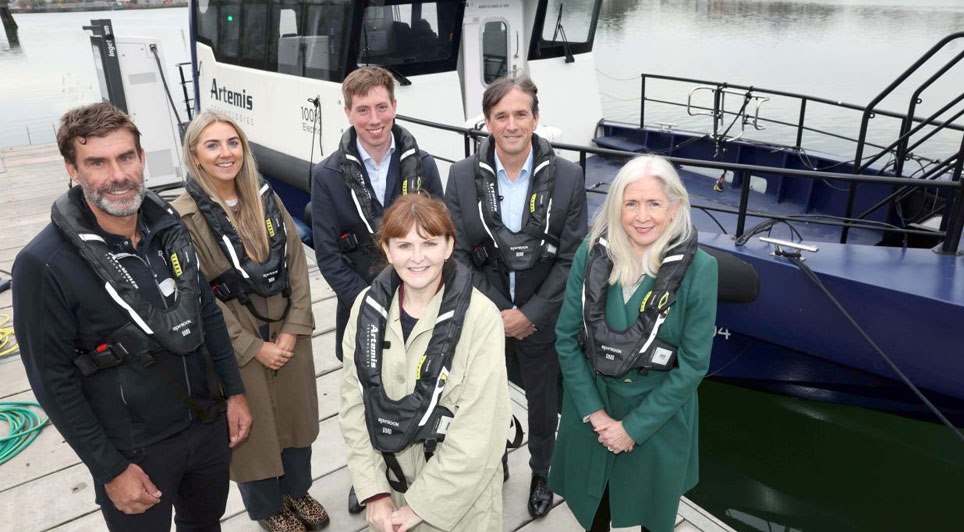
The sea trial in Northern Ireland measures long time performance of Deep Green for valuable insights for the first full scale installation of Deep Green, planned for 2015 and also possibly somewhere in the UK. The Deep Green demonstrator has a three metre long wing and is tethered to an offshore control room in Strangford Lough. A specifically equipped RIB boat enables safe and cost effective offshore operations.
"Ocean currents are the hidden treasure of renewable energy sources," said Anders Jansson. "With their almost continuous water flows they carry large amounts of renewable energy over the globe and with a high load factor compared to weather dependent sources like wind or solar power. The resource is predictable and feasible for providing base grid power, and has minimal environmental impact."
(CD/JP)