Ireland
 UK
UK Scotland
 London

Airtightness is an increasingly important consideration in modern building design and construction. With tighter building standards and greater focus on energy efficiency, every part of the building envelope needs to be considered — including the often-overlooked areas around recessed ceiling fittings.
Downlights, ceiling speakers and other recessed fittings can create openings through the ceiling. If these penetrations are not properly addressed, they can become potential routes for uncontrolled air movement between different parts of the building.
This is where Thermahood provides a practical solution.
Why do recessed fittings affect airtightness?
A ceiling can form an important part of a building's air barrier. However, installing recessed fittings requires openings to be made through that barrier.
Without an appropriate cover or enclosure, these openings can allow air to move through the construction.
Uncontrolled air leakage can contribute to:
• Increased heat loss
• Unwanted draughts
• Reduced energy efficiency
• Moisture movement through the building fabric
• Increased risk of condensation in certain construction conditions
While individual penetrations may appear relatively small, multiple recessed fittings across a building can create a significant number of potential leakage points.
A simple way to address the penetration
Thermahood covers are designed to provide an enclosure around recessed ceiling fittings, helping to address the penetration as part of the overall ceiling construction.

By creating a defined cover around the fitting, Thermahood can help reduce uncontrolled air movement through the ceiling penetration when correctly installed as part of the appropriate construction.
This is particularly valuable where maintaining the continuity of the ceiling's airtight layer is an important part of the building design.
Airtightness starts with the details
Achieving good airtightness isn't simply about choosing airtight materials. It is about considering all the junctions, penetrations and interfaces within the building envelope.
Recessed lighting is a good example.
A project may have carefully designed walls, roofs and floors, but if numerous penetrations are left inadequately addressed, they can undermine the overall approach to airtightness.
By specifying an appropriate cover at the design stage, recessed fittings can be incorporated into the ceiling construction without leaving the penetration as an afterthought.
Supporting energy efficiency
Reducing uncontrolled air leakage can help a building perform more efficiently.
When warm air escapes through gaps and penetrations, energy used to heat the building can be lost. Limiting unnecessary air movement therefore forms an important part of achieving a well-performing building envelope.
Thermahood helps address one of these potential leakage points by providing a dedicated enclosure for recessed ceiling fittings.
It is one relatively simple detail that can contribute to the wider airtightness strategy of a building.
Airtightness, thermal performance and condensation
Airtightness is also closely connected to the movement of heat and moisture through a building.
Uncontrolled air movement can carry moisture into parts of a construction where temperatures are lower. Depending on the design and conditions, this can increase the risk of condensation.
Providing an appropriate enclosure around recessed penetrations can help control this unwanted air movement.
As with all building products, the overall performance depends on the complete construction, correct specification and installation in accordance with the relevant installation requirements.
Designed for recessed ceiling applications
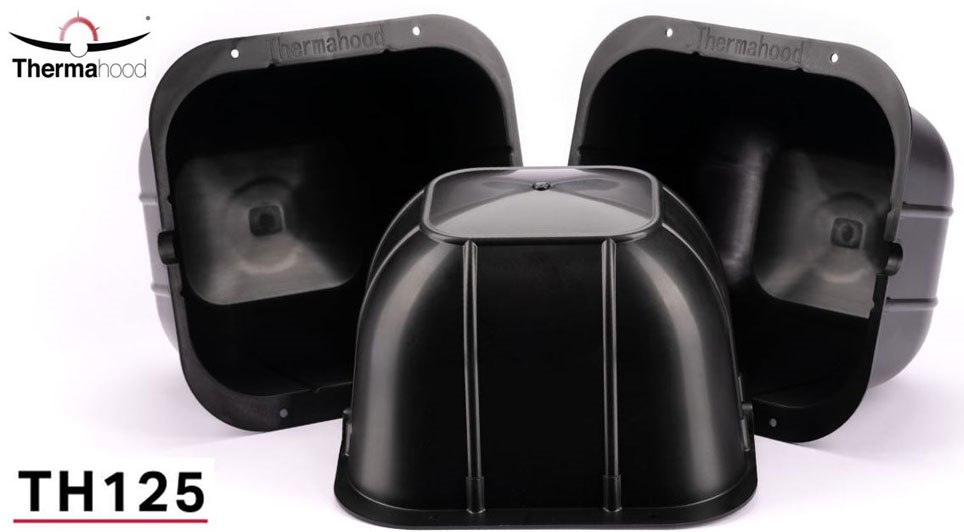
Our Thermahood TH125 and other products are designed specifically for recessed ceiling applications, providing a practical way to address penetrations created by recessed fittings.
Whether you're working on a new-build project, refurbishment or specification package, considering the treatment of recessed fittings early in the design process can help avoid potential airtightness issues later.
Don't overlook the small penetrations
Airtightness is achieved through attention to detail.
Walls, roofs, floors, windows and doors are often carefully considered when developing an airtightness strategy. Recessed ceiling fittings should be treated with the same level of attention.
By incorporating Thermahood into the design, installers and specifiers have a dedicated solution for addressing recessed ceiling penetrations and helping reduce uncontrolled air leakage.