Ireland
 UK
 Scotland
 London


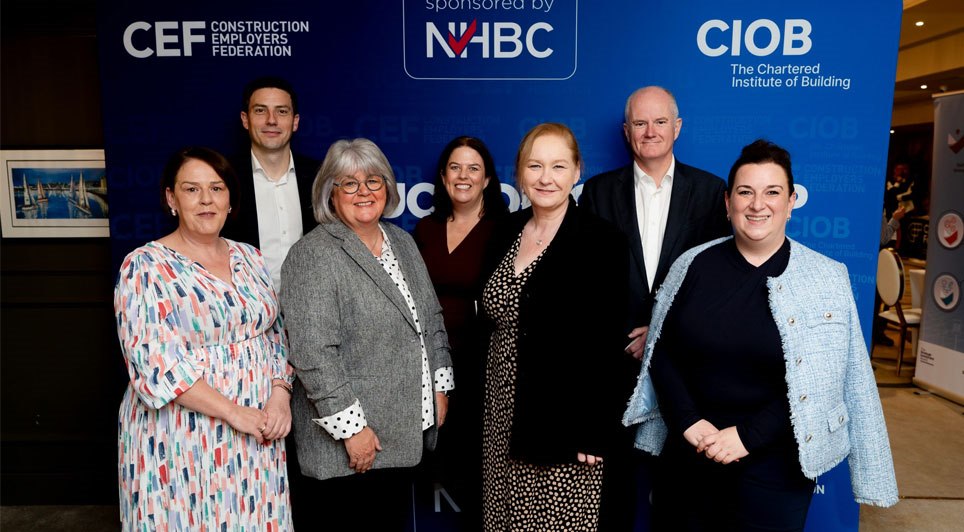
Industry leaders have convened to examine how construction clients and contractors can convert social value policy into practical, measurable benefits for communities across Northern Ireland.
The Construction Employers Federation (CEF) and the Chartered Institute of Building (CIOB) co-hosted the Navigating Social Value: Understanding the Policy and Delivering Meaningful Impact event at The Ebrington Hotel, Derry/Londonderry, on Friday 16 October. Part of CEF's Construction Close-Up series delivered with CIOB and sponsored by NHBC, the session brought together contractors, clients, professional bodies and social value specialists.
With social value increasingly central to public procurement, contributors explored how companies can move beyond box-ticking to create lasting outcomes through jobs, apprenticeships and skills, meaningful community engagement, responsible site practices and stronger local supply chains.
Opening the event, Mark Spence, Chief Executive of CEF, said: "Construction has long played a significant role in Northern Ireland's economy and society. Our members do much more than deliver buildings and infrastructure; they create jobs, develop skills, support local businesses and contribute to the communities in which they work. We want to ensure that the social value that the industry can deliver is meaningful, recognised and supported by clients as our wider contribution, rather than simply another requirement to meet when tendering for work."
Providing a view of the current policy and procurement framework, Esther Barnes, Social Value Advisor for Construction Contracts at the Strategic Investment Board, guided attendees through the requirements and openings for firms working on public contracts. Esther commented: "Social value provides an opportunity for public procurement to deliver benefits that extend beyond the completion of a contract. Construction projects can support employment and skills, strengthen local supply chains and make a positive contribution to the communities in which they operate. The challenge is to ensure these commitments are relevant, deliverable and measurable, so that social value becomes a meaningful part of how projects are planned and delivered."

Desiree Blamey, Managing Director of the Considerate Constructors Scheme, highlighted how responsible construction and transparent engagement can evidence the sector's broader contribution. Desiree added: "Construction has a significant influence on the places where people live and work and its responsibilities extend beyond delivering a building or infrastructure project. The industry has an opportunity to create lasting value through considerate working practices, positive engagement with communities, investment in people and support for local economies. Social value is most effective when it is embedded in everyday business decisions and focused on the outcomes and impact that construction can achieve, rather than treated as a standalone exercise."
A panel discussion chaired by Jim Fitzpatrick examined how to turn policy intent into delivery on the ground, and what that means for clients, contractors and the wider supply chain.
Panellists included Barry Kerr of Apex Housing Association, Nuala Griffiths of Heron Bros, and Paula Quigley, Managing Director of Noviqa Ltd and Chair of the TDS Charitable Foundation, alongside speakers Esther Barnes and Desiree Blamey.
Debate focused on integrating social value into project planning, procurement and execution, rather than treating it as a tender compliance task. Priorities discussed included employment and skills pathways, community support and local sourcing, forging effective partnerships, and ensuring commitments translate into measurable and enduring results.
Speakers also stressed the need for collaboration between clients, contractors, community groups and other stakeholders so that social value reflects local priorities and continues to deliver benefits after project completion.
Reflecting on the discussion, Yvonne Conway, Chair of CIOB Northern Ireland, said: "Collaboration is essential if we are to make social value a meaningful part of construction. By bringing together clients, contractors, professionals and community organisations, we can share good practice, understand local needs and identify opportunities to deliver benefits that last well beyond the life of a project. The industry has an opportunity to make a real difference, and that starts with building social value into the way we plan, deliver and evaluate our work."
For Northern Ireland's construction industry, social value represents both duty and opportunity. By leveraging projects, expertise and supply chains, businesses can open routes to employment, nurture future skills, back local enterprises and strengthen communities. Achieving this effectively hinges on early planning, authentic partnerships and clarity on what success looks like.
Attendees also had the chance to connect with organisations supporting social value, skills development and community engagement across the region.
Through the Construction Close-Up series, CEF and CIOB will continue creating forums for professionals to engage with emerging policy, exchange practical insights and respond to evolving expectations while delivering long-term value for Northern Ireland.